
 Tashi Nima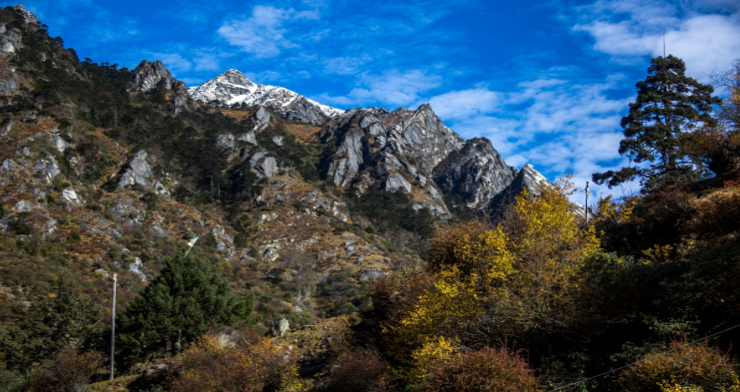
High in the remote Himalayas, where the Line of Actual Control (LAC) cuts across Arunachal Pradesh, a new road has quietly transformed lives and revived old memories. The freshly laid blacktop linking Mago-Chuna and nearby villages to Tawang is more than just infrastructure, it is a lifeline for communities long forgotten by the modern world. For decades, these borders settlements remained cut off, known only for their role in the 1962 war with China and the haunting memory of soldiers who never returned. Now, with the Vibrant Villages Program and support from the Indian Army, the Monpa people of Mago and Thingbu are stepping into a different future, one with schools, healthcare and the hope of eco-tourism. Yet, as villagers celebrate progress, the mountains still echo tales of sacrifice and resilience from a frontier where history and modernity walk hand in hand.
The eastern Himalayas, near the Line of Actual Control (LAC) with China, lies the little-known region of Mago-Chuna in Arunachal Pradesh. Until recently, this frontier village was cut off from the rest of the country except for narrow trekking routes. Now, for the first time, a black-topped road connects Jung → New Maling → Thingbu → Mago → Chuna, winding through narrow gorges and high Himalayan terrain. It covers Approximate Distance: Jung to Mago: ~45–50 km via Thingbu, Mago to Chuna: ~15–20 km, Total Estimated Length: ~60–70 km. It’s Altitude Range starts near Jung (~6,000 ft), Passes through Thingbu (~11,000 ft) Reaches Mago (~11,800 ft) and Ends near Tulung-la Pass (~17,000 ft), close to Chuna. For the villagers, the road is not just a strip of tar, it is a lifeline, a sign that they are no longer forgotten and a reminder of the turbulent history their land has witnessed.
When Chief Minister Pema Khandu visited the area on 21 June 2025 , he summed it up best. “Now that Mago-Chuna, nestled near the LAC, is connected by road, you no longer walk out of necessity. This important road built by the Border Roads Organisation (BRO) with support from The Indian Army and ITBP this includes C-shaped cliffside caverns, river crossings and snow-prone passes. Serves as the starting segment of the proposed 2,000 km Arunachal Frontier Highway, which will run along the India-China border from Mago to Vijay Nagar.
According to rediff.com Mago-Chuna and nearby villages in Arunachal Pradesh carry deep scars of history. In 1962, Chinese troops marched through Thingbu during the war, leaving local villagers fearful yet defiant. Elders still recall how the enemy soldiers moved at night, seeking guides, unlike the disciplined Indian Army. Even after the war, tragedy struck in 1975 when four Indian jawans were ambushed near Tulung-la Pass a memorial now stands in their honour. Long before these conflicts, British explorers in 1913 described Mago as an isolated land of yak herders, colourful dress and harsh winters, a rhythm of life little changed for decades.
Many young villagers simply fled into the hills rather than risk becoming unwilling guides. “They were not like our soldiers,” one elder recalled with a mix of humour and pride. “They walked in big groups, smoking cigarettes. Our Indian soldiers are far more disciplined.” For some villagers, the memories are more tragic. In 1975, long after the war, a Chinese ambush near Tulung-la Pass killed four Indian jawans of Nepali origin. Today, a memorial at 17,000 feet stands in their honour, a silent reminder that peace in these mountains has been fragile.
That is why the new road to Mago-Chuna feels almost like a revolution. For the Monpa people who inhabit Thingbu and surrounding villages, life is beginning to open up. Goods arrive faster, medical help is accessible, and children can dream of education beyond the mountains. The change is part of the central government’s Vibrant Villages Program, which connects 455 of remote border villages in Arunachal Pradesh. Together with the Indian Army and the Indo-Tibetan Border Police (ITBP), who have long provided security and assistance, the state is working to integrate remote villages into the national mainstream without stripping them of their traditions. A school, a dispensary, clean drinking water and now a road basic infrastructure is arriving, but carefully.
When visitors walk into villages like Thingbu, they are greeted not just with curiosity but with warmth. During one recent visit, the villagers laughed heartily when talking about the 1962 war. An elderly Monpa said half-seriously, half in jest: “If the Chinese come again, I will fight and kill them!” The whole village burst out laughing. Moments like these capture the spirit of these people rooted in painful memories, yet strong, resilient, and humorous.
Thingbu today owns more than a thousand Yaks, a sign of prosperity. But what excites the villagers most is not just material progress, it is recognition. For decades, these settlements were treated as dot points on a map, useful only as border markers. Now, they are finally being heard and supported. The new road, winding through gorges and crossing rivers, is more than an engineering achievement. It is a bridge that links memory and modernity. It carries stories of sacrifice from 1962 and 1975, yet it also brings the promise of education, tourism and development.
Standing by the memorial for fallen Indian soldiers, overlooking the towering Tulung-la, one is reminded that these mountains carry pain as well as pride. But meeting the Monpa villagers, walking through yak pastures, and hearing their laughter, one also feels hope, hope that the road to Mago-Chuna is not just about asphalt, but about healing and belonging. For the villagers, the message is simple: they do not dream of distant paradises anymore. Their paradise is right here, in their mountains, now finally connected to the rest of India.
The road to Mago-Chuna is more than a civil engineering feat, it is the stitching together of history, sacrifice and hope in one of India’s most remote corners. For decades, the Monpa people of Thingbu, Mago and Chuna lived in isolation, their villages remembered only in the context of conflict the 1962 war, the 1975 ambush at Tulung-la, the haunting silence of borders under constant tension. Today, the arrival of a proper road signals not only physical connectivity but emotional recognition. It tells the villagers that they are part of the nation’s story, not forgotten outposts on a disputed frontier. This transformation is also strategic. The road forms a critical segment of the proposed Arunachal Frontier Highway, linking remote border regions while supporting the Army and ITBP in safeguarding India’s sovereignty. Yet, its greatest value lies in what it offers the people themselves faster access to healthcare, education, markets and the possibility of sustainable eco-tourism that celebrates culture without destroying it. Standing at Tulung-la, where a memorial honours fallen soldiers, one feels the weight of history. But hearing the laughter of villagers today, one equally senses resilience. In Mago-Chuna, the past and future walk together on a new road that finally brings belonging, dignity and hope.
About the Author

 Rinchen Tashi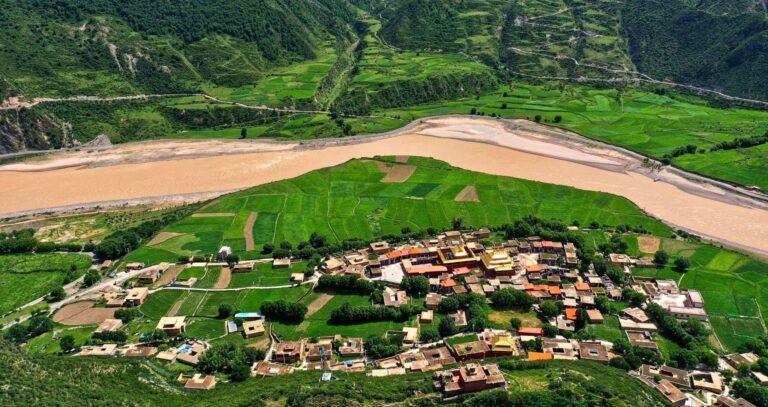
 Lobsang