

China Water Release in TAR (Tibet Autonomous Region)Triggers Deadly Floods in Nepal
 Ashutosh Kumar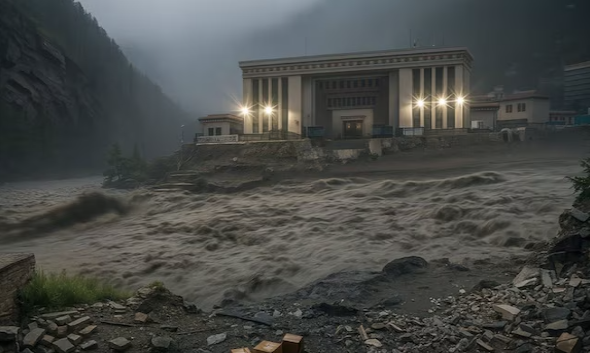
On 08 July 2025 relentless heavy rains in the Tibet Autonomous Region triggered catastrophic flooding in Nepal’s Bhotekoshi River, devastating the Rasuwagadhi area along the China-Nepal border. The floodwaters surged with such force that they washed away the crucial Maitri (Friendship) Bridge, a vital trade link between Nepal and China, and caused severe damage to the Rasuwagadhi Hydropower Project claiming at least nine lives and leaving dozens missing. Nepal accuses China of irresponsibly releasing uncontrolled waters and obstructing rescue operations by detaining Nepalese helicopters near the border. China’s persistent refusal to share real-time hydrological data critically hampers early warning systems, endangering downstream communities and straining bilateral relations.
According to the https://kathmandupost.com/ On 08 July 2025, heavy rains in Tibet triggered catastrophic flooding in Nepal’s Bhotekoshi River, devastating Rasuwagadhi near the China-Nepal border. The flood washed away the vital Maitri Bridge and severely damaged the Rasuwagadhi Hydropower Project, causing at least nine deaths and over two dozen missing. According to the International Centre for Integrated Mountain Development (ICIMOD), while excessive rainfall contributed, the primary cause was likely a Glacial Lake Outburst Flood (GLOF) or Landslide Lake Outburst Flood (LLOF) triggered by the unstable glacial lake in the Tibetan region.
Nepal has vocally accused China of irresponsibly releasing uncontrolled water from the Tibetan region, which not only caused the devastating flood but also severely delayed rescue operations. Reports surfaced that during the rescue efforts, Nepal Army helicopters strayed toward the Chinese side of the border and were held by the People’s Liberation Army (PLA) for approximately 90 minutes before being allowed to return. This incident caused critical delays in rescue missions, worsening the humanitarian situation.
Nepali officials have repeatedly highlighted China’s reluctance to share real-time transboundary rainfall and river flow data, which is essential for early warning systems against such disasters. The lack of timely information sharing has been a persistent issue, severely hampering Nepal’s ability to prepare for and respond to flood risks originating upstream in Tibet. The absence of transparent communication from China not only endangers lives but also strains diplomatic ties between the two neighbours.
The destruction of the Maitri Bridge has brought cross-border trade to an abrupt halt. This bridge was a critical artery facilitating the movement of goods and people between Nepal and China. Hundreds of trucks, including those carrying electric vehicles imported from China, were stranded or swept away by the floodwaters. The loss of this trade route forces Nepal to rely on Indian side route which will provide the necessary items during this crisis time. Additionally, the partial damage to the Rasuwagadhi Hydropower Project threatens Nepal’s energy security and economic development. The hydropower plant, located near the border, was submerged and damaged by the floodwaters, further compounding the disaster’s economic toll.
The flood is a stark reminder of the increasing frequency and intensity of climate-induced disasters in the Himalayan region. The United Nations World Meteorological Organization and ICIMOD have warned that rising temperatures are intensifying the water cycle, leading to more extreme floods, landslides, and glacial lake outbursts. However, the lack of cooperation and data sharing from China undermines regional efforts to mitigate these risks.
Nepal’s predicament highlights the urgent need for China to adopt a more responsible and transparent approach to managing its upstream water resources. Sharing real-time hydrological and meteorological data is critical to issuing early warnings and minimizing casualties downstream. China’s continued reluctance to engage in such cooperation not only endangers Nepal’s population but also damages its international reputation as a responsible regional power.
China’s irresponsible release of uncontrolled waters from the Tibet Autonomous Region caused devastating floods in Nepal’s Bhote Koshi River on July 8, 2025, destroying critical infrastructure and claiming lives. By detaining Nepalese rescue helicopters and persistently refusing to share real-time hydrological data, China severely delayed rescue operations and endangered downstream communities. This pattern of neglect and opacity is consistent in China’s dealings with neighboring countries, undermining regional safety and cooperation. China must adopt transparency and responsibility in managing transboundary water resources to prevent recurring disasters and restore trust.
About the Author

 Tashi Nima


 Rinchen Tashi