China’s Push to Rename Tibet as “Xizang” Faces Global Resistance and Identity Backlash
 Ashutosh Kumar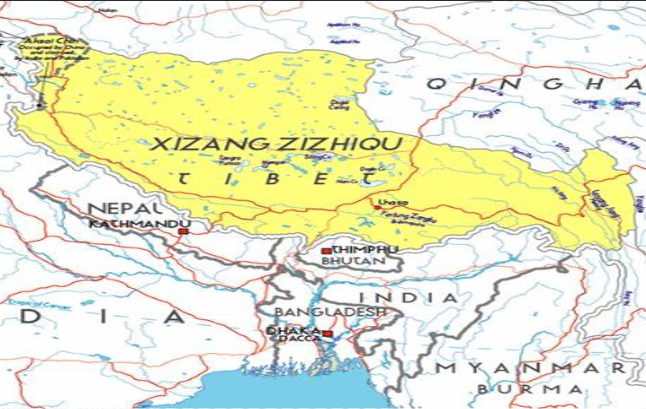
A group of Nepali artists, filmmakers, and cultural workers condemned the Kathmandu International Mountain Film Festival (KIMFF) for using the term “Xizang” to refer to Tibet, a name promoted by the Chinese government. They criticized this choice as state-sponsored propaganda that erases Tibetan identity. The artists, who had previously supported KIMFF projects, expressed disappointment and warned that film festivals influence public perception and cultural understanding. They argued that presenting propaganda as art and using politically charged terms to define a people is irresponsible. This is an example of how China exerts control over various Nepali organizations, aligning them to serve Beijing’s strategic interests.
To understand this, we need to understand that how Chinna influence the Nepal, China influences Nepal through infrastructure investments, economic partnerships, and cultural exchanges. It funds major projects like roads, railways, and hydropower, strengthening connectivity between the two countries. China also promotes its political and cultural narratives in Nepal, aiming to increase its regional influence. This influence extends to trade, tourism, and diplomatic support. China is trying to gain strong control over Nepal’s politics by using money and investments, getting involved directly in political matters, working closely with Nepal’s security forces, and using cultural influence. Often, China focuses more on its own goals than on supporting Nepal’s democratic system.
As per the report of www.hrw.org, Since the 2008 Tibetan uprising, China has tightened control over Tibetans in Tibet and pressured Nepal to help restrict Tibetan rights. Nepal, sharing a long border with China and home to many Tibetans, has signed security and intelligence-sharing agreements with China. Nepalese police, trained and supported by China, monitor Tibetan communities closely, limit public demonstrations, and often detain Tibetans during sensitive times like Dalai Lama anniversaries or Chinese official visits. Tibetans in Nepal face arrests, surveillance, and restrictions on their freedom of expression and assembly. China also pressures Nepal to stop Tibetans from crossing the border and cooperating with Chinese efforts to prevent Tibetan refugees from reaching India, where the Dalai Lama and Tibetan government-in-exile are based. China’s influence grew after 2008 through increased economic and diplomatic ties, encouraging Nepal to prioritize Beijing’s interests. Nepal follows the “One-China policy” and agrees not to allow anti-China activities on its soil, cracking down on Tibetan political actions.
Monasteries near the border receive money and pressure from China to promote Chinese Communist Party ideas and a changed version of Tibetan Buddhism, weakening traditional Tibetan religion. China also uses some Tibetans in Nepal as informants by offering money or threatening their families in Tibet to create mistrust.
China is aggressively pushing its Sinicized version of Tibetan Buddhism in Nepal to weaken the spiritual authority of the Dalai Lama and reshape Tibetan religious traditions under its control. This strategy aims to undermine genuine Tibetan Buddhist practices and replace them with a state-controlled, politicized version that serves Beijing’s agenda. Despite Nepal’s official stance as a religiously neutral country, China exerts growing influence through economic leverage like the Belt and Road Initiative and political pressure to suppress Tibetan activism. China’s efforts reveal a broader policy to co-opt Buddhism as a tool for controlling the Tibetan diaspora and erasing authentic Tibetan cultural and religious identity beyond its borders.
On other hand, China tries to spread its “Xizang” (Tibet) narrative in Nepal to strengthen its control over Tibet and limit support for Tibetan independence. By promoting the idea that Tibet is an inseparable part of China, Beijing aims to reduce sympathy for the Tibetan cause among Nepalese people and government. Nepal shares a long border with Tibet, making it a key area for China to control Tibetan refugees and activism. China also wants Nepal to follow its policies, such as stopping Tibetan protests and limiting Tibetan cultural activities. This helps China prevent Nepal from becoming a base for Tibetan political movements. Additionally, spreading the Xizang narrative supports China’s broader goal of regional stability and economic cooperation under its Belt and Road Initiative, ensuring Nepal stays aligned with Chinese interests rather than supporting Tibetan independence. This strategy weakens the Tibetan diaspora’s influence in Nepal.
China is using economic power, political pressure, and cultural influence to control Nepal’s actions toward Tibet and suppress Tibetan identity. By promoting the term “Xizang” instead of Tibet, China pushes its propaganda to erase Tibetan culture and independence. This strategy is part of a larger effort to control the Tibetan narrative, silence dissent, and expand Chinese influence in Nepal through infrastructure, security deals, and religious manipulation.
About the Author

 Tashi Nima
 Rinchen Tashi