

Torture, Blackouts and Surveillance: China’s Brutal Crackdown on Peaceful Anti‑Mining Protesters in Kham Zachukha
 Sundra Rao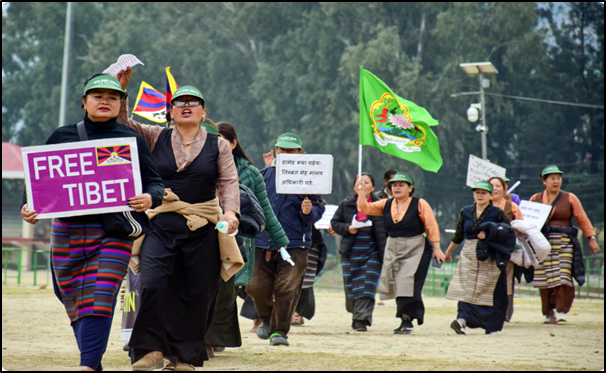
China’s latest gold mining drive in Kham Zachukha exposes a ruthless campaign to strip Tibetans of their sacred land and silence all dissent through brute force and fear. Aggressive mining at Serkhok (“Gold Valley”) has torn into a traditional grazing ground and spiritual landscape, while security forces answer peaceful protest with raids, torture, disappearances and a suffocating communications blackout. This weaponised “development” shows Beijing using mining, surveillance and repression to tighten its grip over Tibet and crush any defence of the plateau’s fragile environment.
On 5 November 2025, Tibetans in Kashi village, Sershul County, discovered aggressive gold‑mining at Serkhok, or “Gold Valley”, a traditional grazing ground and spiritually revered landscape. Villagers confronted the miners and alerted local officials, who reportedly dismissed community concerns, asserting the state’s “complete ownership” and denying Tibetans any right to intervene.
For Tibetans, Serkhok is not just an economic resource but part of a sacred plateau that sustains fragile ecosystems and pastoral livelihoods. Chinese authorities and companies, however, continue to greenwash mining as “development” and “green energy” while tearing up grasslands, polluting water sources and undermining the Himalayan environmental shield relied upon by millions downstream.
Mass arrests and disappearances
China’s response to this peaceful environmental protest was an iron‑fisted security operation. On the evening of 6 November, security forces carried out door‑to‑door raids in Kashi, detaining around 80 Tibetans and transporting them to Sershul County for interrogation. By early December, many detainees had been released, but at least 18 were initially reported missing, with seven Tibetans still unaccounted for weeks later, their whereabouts unknown.
Testimony gathered by Tibet Policy Institute and Tibet Watch describes severe torture and ill‑treatment in custody. Released detainees reportedly suffered broken ribs, kidney damage and other serious injuries, and some were only freed after being forced to sign false “confessions”, underscoring the coercive nature of China’s so‑called rule of law in Tibet.
To hide the crackdown, Chinese authorities imposed a sweeping communications blackout on the region. Internet and phone access have been heavily restricted, and residents say that speaking about the protest to anyone outside the area is treated as a “serious criminal offence”. Local Tibetans risked their freedom and safety to smuggle out information, highlighting both the scale of repression and the courage required simply to tell the truth about life under Chinese rule.
Activists report that surveillance cameras now monitor even nomad tents, turning everyday life into a panopticon designed to crush dissent before it can form. Chinese police are reportedly visiting every house in Kashi, interrogating residents about how news of the protest reached the outside world and warning that further leaks will trigger harsher punishment.
From Dharamshala, where the Central Tibetan Administration is based, Tibetans in exile have condemned Beijing’s campaign of arrests, torture and environmental vandalism in Zachukha. Tibet Watch researcher Sonam Topgyal describes a pattern of politically driven, unregulated mining across Tibet, where media access is barred and locals are threatened into silence while officials collude with private business interests.
Tibetan Youth Congress general secretary Tenzin Lobsang warns that mining carried out in the name of “green energy” is in fact destroying Tibet’s environment and injuring local residents, many of whom are now hospitalized, with seven still missing. He urges the international community and human‑rights advocates to oppose China’s destruction of the Himalayan belt, which functions as Asia’s water tower and climate regulator.
Deputy director of the Tibet Policy Institute, Tempa Gyaltsen Zamlha, has appealed to governments and multilateral bodies to challenge China’s violations at Zachukha. He demands the immediate and unconditional release of all detained Tibetans, an end to mining at Serkhok, and accountability for both the operating company and the Chinese officials who authorised and enforced this project.
What is unfolding in Kham Zachukha is not an isolated “law and order” issue but part of a systematic strategy: weaponising resource extraction, surveillance and fear to tighten Beijing’s grip over Tibet’s land and people. Unless the world responds with sustained diplomatic pressure, targeted sanctions and vocal solidarity, China will read its silence as a licence to deepen environmental plunder and human‑rights abuses on the Tibetan plateau.
About the Author

 Tashi Nima

 Rinchen Tashi