

One-Child Legacy to Baby Boom Plea: China’s Desperate Push for Population Revival Amid Public Scepticism
 Sundra Rao
In a sleek Shanghai apartment overlooking the Huangpu River, 28-year-old software engineer Li Wei and his wife scroll through Douyin videos of subsidized playgrounds and cash-for-kids ads. The couple, both earning modest tech salaries, laugh off the latest government plea: a 13% VAT on contraceptives effective January 1, 2026. “Why add a child to this pressure cooker?” Li asks, gesturing to their cramped 500-square-foot home. China’s one-child policy, enforced brutally from 1979 to 2015, slashed births by an estimated 400 million and birthed a demographic time bomb rapid aging, a shrinking workforce, and a stark gender imbalance from sex-selective abortions. Beijing now dangles aggressive pro-natalist carrots: cash bonuses up to $10,000 per child in provinces like Guangdong, extended maternity leave, and three-child permissions since 2021. Yet the irony stings. Officials crave a baby boom; young Chinese, scarred by policy U-turns and economic woes, remain deeply unconvinced.
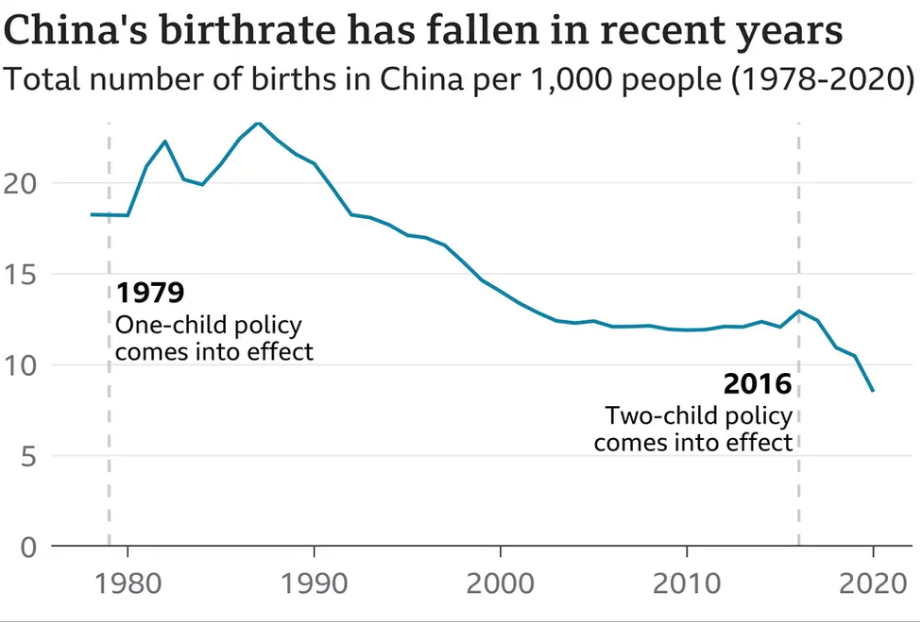
China’s one-child policy emerged from Mao Zedong’s post-Great Leap Forward panic over famine and overpopulation. Launched in 1979, it capped urban families at one child, rural ones at two if the first was a girl. Enforcement turned draconian: fines devoured incomes, forced sterilizations scarred rural villages, and late-term abortions haunted survivors. Official tallies claim it averted 400 million births, stabilizing food supplies but hollowing out the future.
The unwind began quietly. In 2015, amid whispers of labour shortages, limits eased to two children. By 2016 marking a decade since full scrappage this January three were allowed. Fertility rates tell the grim tale: from six children per woman in 1950, it cratered to 1.09 by 2023, well below the 2.1 replacement level. Today, 280 million families bear the one-child burden, with only children shouldering elder care. UN projections warn of 400 million seniors by 2035, up from 20% of the population now aged 60-plus.
Government’s New Push
Beijing’s reversal accelerated under Xi Jinping, who in 2024 labelled low birth-rates a “profound crisis” threatening national rejuvenation. Provinces compete with incentives: Sichuan offers $10,000 per second child, Henan prioritizes family housing loans, and Beijing subsidizes fertility treatments. Maternity leave stretches to 180 days in some areas, with paternity perks trailing.
January 1, 2026, ushered in the boldest twist: a 13% VAT on condoms and birth control pills—the first tax since 1994 exemptions under the old regime—while childcare and eldercare get breaks. State media frames it as “family support” in a tax overhaul, per Xinhua. Tech amplifies the campaign: AI apps like “Love Nest” match singles via genetic compatibility quizzes; Weibo and Douyin flood feeds with gamified propaganda, awarding points for “harmonious family” posts redeemable for baby formula.
Yet births dipped to 9.5 million in 2024 from 14.7 million in 2019, even with a Dragon Year blip. Officials pin hopes on cultural nudges, but sceptics see revenue grabs amid slumping property and local debt.
Public Resistance
Urban millennials and Gen Z push back hard. In Shanghai, apartments cost 30 times the average salary; raising one child to college devours $50,000 amid cutthroat gaokao exams. The infamous 996 work culture 9 a.m. to 9 p.m., six days leaves no room for parenting. Women face stark penalties: career stalls post-maternity, in a society where “leftover women” over 27 draw state scorn.
Voices echo defiance. Hu Lingling, a Beijing mother of one, told Associated Press she’d “lead the abstinence protest,” calling the condom tax “ruthless” compared to one-child era abortions. Teacher Zou Xuan, 32, in Jiangxi, decried it as “managing women’s bodies and desires.” Online, the “lying flat” movement surges—youth rejecting marriage and kids in a “rat race.” Rural-urban divides sharpen: villages empty of youth, while cities hoard underground contraception stockpiles, per BBC reports. Protests simmer on Weibo, deleted swiftly, but “tang ping” (lying flat) hashtags trend globally.
Demographer Yi Fuxian of the University of Wisconsin-Madison dismisses the condom tax as “overthinking” a futile revenue ploy amid debt woes, not a birth fixer. IMF economists warn of 1-2% annual GDP drag from workforce shrinkage, echoing Japan (fertility 1.2) and South Korea (0.7), where cash floods failed.
Geopolitically, it’s dire. A greying China strains PLA modernization fewer recruits for South China Sea patrols or Taiwan contingencies and Belt & Road ambitions, as noted in recent Economic Times reports on export slumps and stimulus needs. Pew Research highlights 1.4 million HIV cases in 2024, with STI surges from potential contraception gaps risking more abortions (9-10 million yearly pre-2022).
Can subsidies and taxes rewind China’s fertility clock, or has one-child trauma fused with economic despair into an irreversible cultural shift? As population shrinks 1.411 billion in 2022, first decline since 1961 Beijing’s pleas risk backlash, not babies. The stakes tower: a faltering superpower, its global heft dimmed by empty cradles.
About the Author


 Tashi Nima


 Rinchen Tashi