

China’s People’s Police: The Architecture of Repression Behind Beijing’s Claims of “Unity”
 Lobsang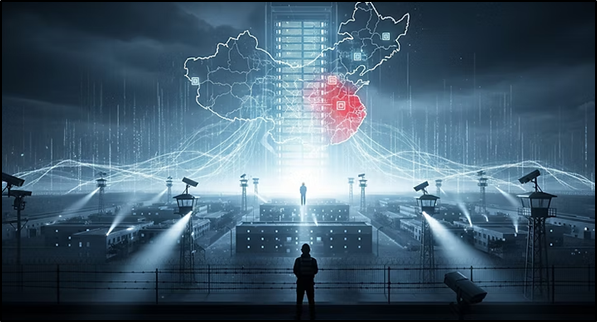
Image Credit – Accesshub.Space
Every January 10, the Chinese Communist Party (CCP) celebrates People’s Police Day, presenting its security forces as noble “guardians of peace” tasked with protecting social stability and national unity. State media floods the public with images of disciplined officers, patriotic slogans, and official praise. But for millions of people subjected to China’s vast security apparatus, this celebration is a painful reminder of how law enforcement has been transformed into a tool of authoritarian control. Beneath Beijing’s carefully curated narrative lies a system of repression that relies on mass detention, pervasive surveillance, cultural erasure and intimidation that extends far beyond China’s borders.
At the heart of this system are the People’s Police, a force designed not to serve the public, but to safeguard the CCP’s monopoly on power. Their role is most starkly visible in Xinjiang, where Uyghurs and other Turkic Muslim minorities have been subjected to an unprecedented campaign of mass incarceration. Under the guise of counterterrorism and “vocational training,” authorities have detained more than a million people in sprawling camps. Testimonies from former detainees and leaked internal documents describe forced political indoctrination, psychological abuse, harsh discipline and the systematic suppression of religious belief. The People’s Police are instrumental in carrying out arrests, guarding facilities, and enforcing compliance within this network of camps.
Outside the camps, daily life in Xinjiang is defined by surveillance. Police checkpoints, facial recognition cameras, biometric data collection, and digital monitoring ensure constant scrutiny. Every movement, conversation, and religious expression can trigger punishment. This all-encompassing surveillance state is not merely about security; it is about control reshaping identity, loyalty, and behaviour through fear.
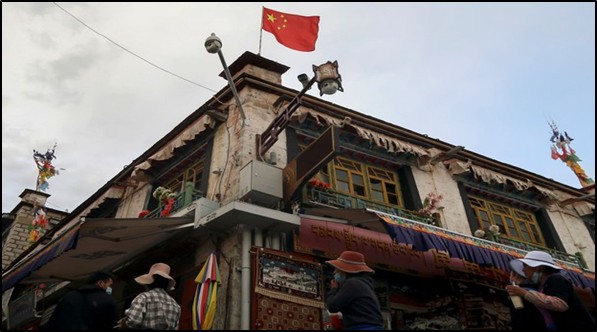
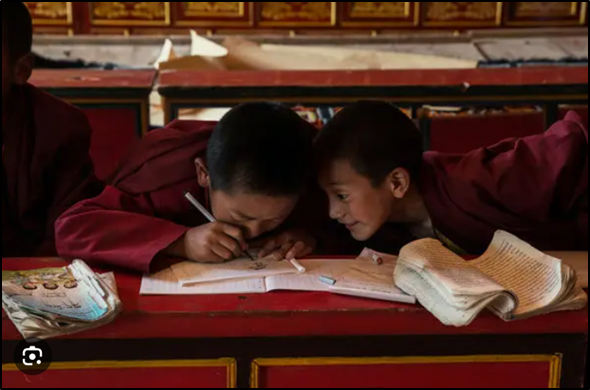
A similar pattern of repression has long existed in Tibet. Tibetan monks, nuns, and civilians face detention for peaceful religious practices, expressions of cultural identity, or loyalty to the Dalai Lama. Monasteries are heavily policed, religious education is restricted, and the Tibetan language is increasingly marginalized in favor of Mandarin. The People’s Police enforce these policies through raids, arrests, and the constant presence of security forces, turning places of worship into monitored spaces and cultural expression into a political risk.
Behind China’s official rhetoric of harmony and development lies a reality defined by camps and prisons. The CCP’s narrative of “unity” depends on the erasure of difference and the silencing of dissent. Yet despite the overwhelming power of the state, Uyghur and Tibetan communities continue to resist cultural annihilation, preserving language, faith, and memory in defiance of systemic repression.
China’s policing system does not stop at its borders. In recent years, Beijing has expanded its reach through campaigns such as Operation Fox Hunt, officially described as efforts to combat corruption and repatriate fugitives. In practice, these operations have become tools of transnational repression. Dissidents, activists, journalists and former officials living abroad report intimidation, surveillance and coercion aimed at forcing their silence or return to China.
For Uyghur and Tibetan diaspora communities, exile offers little protection. Many report threatening phone calls, online harassment, and pressure conveyed through relatives still inside China. Families are used as leverage, with loved ones detained or threatened to compel compliance. These tactics effectively export China’s authoritarian policing methods onto foreign soil, undermining international norms and violating the sovereignty of host countries.
The consequences extend beyond individual victims. Transnational repression creates a chilling effect in democratic societies, where free expression is curtailed by fear of foreign intimidation. Critics self-censor, advocacy groups operate under pressure, and communities fracture under constant surveillance. When a state pursues dissent without regard for borders, repression becomes a global problem.
People’s Police Day, viewed through this lens, is less a celebration of public service than a display of institutionalized power. When law enforcement exists to enforce ideological conformity, suppress religion, and pursue critics worldwide, it no longer functions as a guardian of peace. Instead, it becomes an enforcement arm of authoritarian rule.
China’s record reveals a consistent truth: repression is not an aberration but a governing strategy. True stability cannot be built on mass surveillance, detention camps and fear. Until the CCP dismantles this system and respects fundamental human rights, its claims of unity will remain hollow and the People’s Police will continue to symbolize not peace, but the architecture of control imposed on millions, both inside China and beyond its borders.
About the Author

 Tashi Nima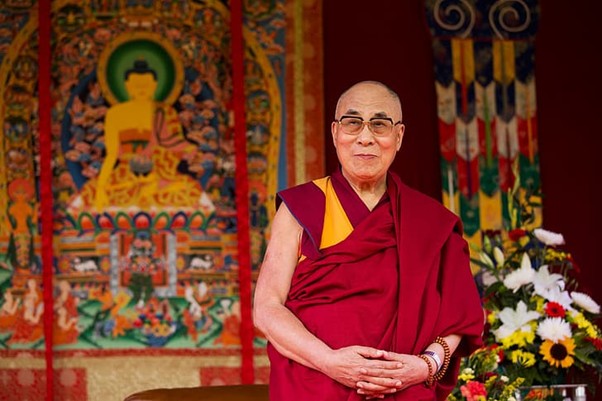
 Rinchen Tashi