
Tibet Faces Growing Silence as Independent Media and Radio Voices Disappear
 Tashi Nima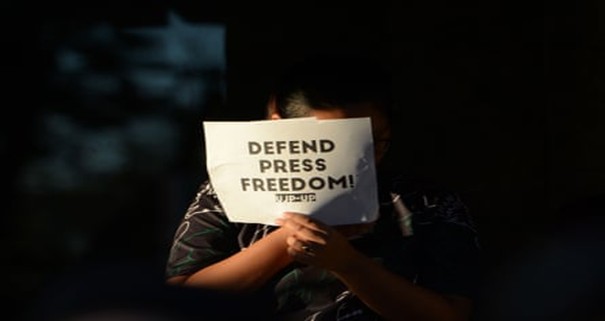
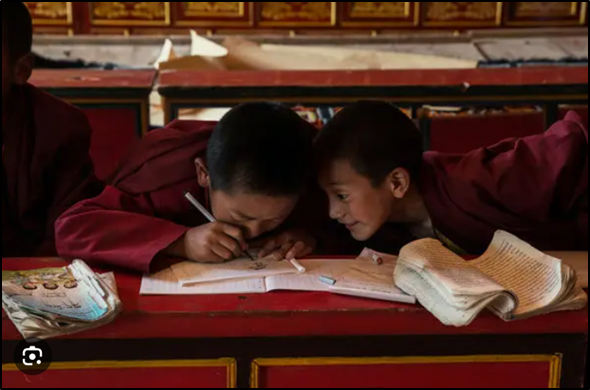
Photo Credit: The Guardian
In Tibet, it is becoming harder to know the truth. The Chinese government controls almost all news and media, spreading only stories that support the Communist Party and its leader, Xi Jinping. Independent journalists and news outlets are being punished or shut down. Many reporters are in prison and foreign media like Radio Free Asia and Voice of America have had to stop their Tibetan broadcasts. Meanwhile, state-owned channels flood the airwaves with messages that show China and its leaders in a positive light, leaving no room for other voices. Reporters Without Borders (RSF) says China is expanding state-run propaganda through China National Radio with 16 new Tibetan-language programs and urges the US Agency for Global Media to restore RFA and VOA services. People in Tibet and across China have very limited access to honest reporting. As a result, Tibetans are left with almost no access to independent information, creating a dangerous gap now filled entirely by government approved propaganda.
Silencing the Counter‑Voices
In recent years, independent Tibetan news has almost disappeared. According to The Guardian, Radio Free Asia (RFA) known for honest reporting on China had to suspend its news operations after funding cuts, ending decades of independent broadcasts into restricted regions. Voice of America (VOA) has also stopped major Tibetan‑language services, leaving a big gap in uncensored information. Without these counter‑voices, Tibetans rely mainly on state‑run media. Reporters Without Borders (RSF) says China has become the world’s largest jailer of journalists and now ranks 178th out of 180 countries in the 2025 World Press Freedom Index, above only North Korea and Eritrea. In China, reporters, editors and even social media users can face punishment or prison for reporting anything the government does not approve. This tight control makes it almost impossible for independent news to reach the public.
The Suffering of Those Who Dared to Speak Out
The crackdown on independent voices goes far beyond Tibet. According to BBC News, prominent critics, scholars and journalists have been prosecuted or jailed under broad national security or state‑security charges, raising global concern over press freedom and the rule of law. Reuters reports that Jimmy Lai, founder of Apple Daily, was sentenced to 20 years in prison in Hong Kong under the National Security Law widely criticised internationally as punishing dissent and independent reporting.
High-profile cases include:
- Jimmy Lai (2026) – 20 years jail under national security charges for his media work and political advocacy.
- Ilham Tohti (2014) – life sentence for “separatism” after peacefully promoting Uyghur rights and dialogue.
- Xu Zhiyong (2023) – sentenced for “subversion of state power” after calling for legal reform and transparency.
- Ren Zhiqiang (2020) – imprisoned on corruption charges after criticising government COVID‑19 policy.
- Michael Kovrig & Michael Spavor (2018) – detained in China on espionage charges amid diplomatic tensions.
The World Must Not Stay Silent
China’s tight control over the media in Tibet is not just about limiting news it is about shaping history and controlling truth. When independent voices like Radio Free Asia and Voice of America disappear, Tibetans are left with only state-approved information. Reporters Without Borders has called on the global community to support independent journalists who risk their freedom to report honestly.
February 13 marked International World Radio Day, a day that celebrates radio as a source of connection and truth. Yet in Tibet, trusted radio voices are fading away. Freedom of the press is the foundation of any free society. The people of Tibet and all of China deserve access to information without fear. The international community must speak out before the remaining space for truth disappears completely.
About the Author

 Rinchen Tashi