Research Note: NIFF Nepal, “Xizang Panorama,” and the politics of cultural programming
 Tashi Nima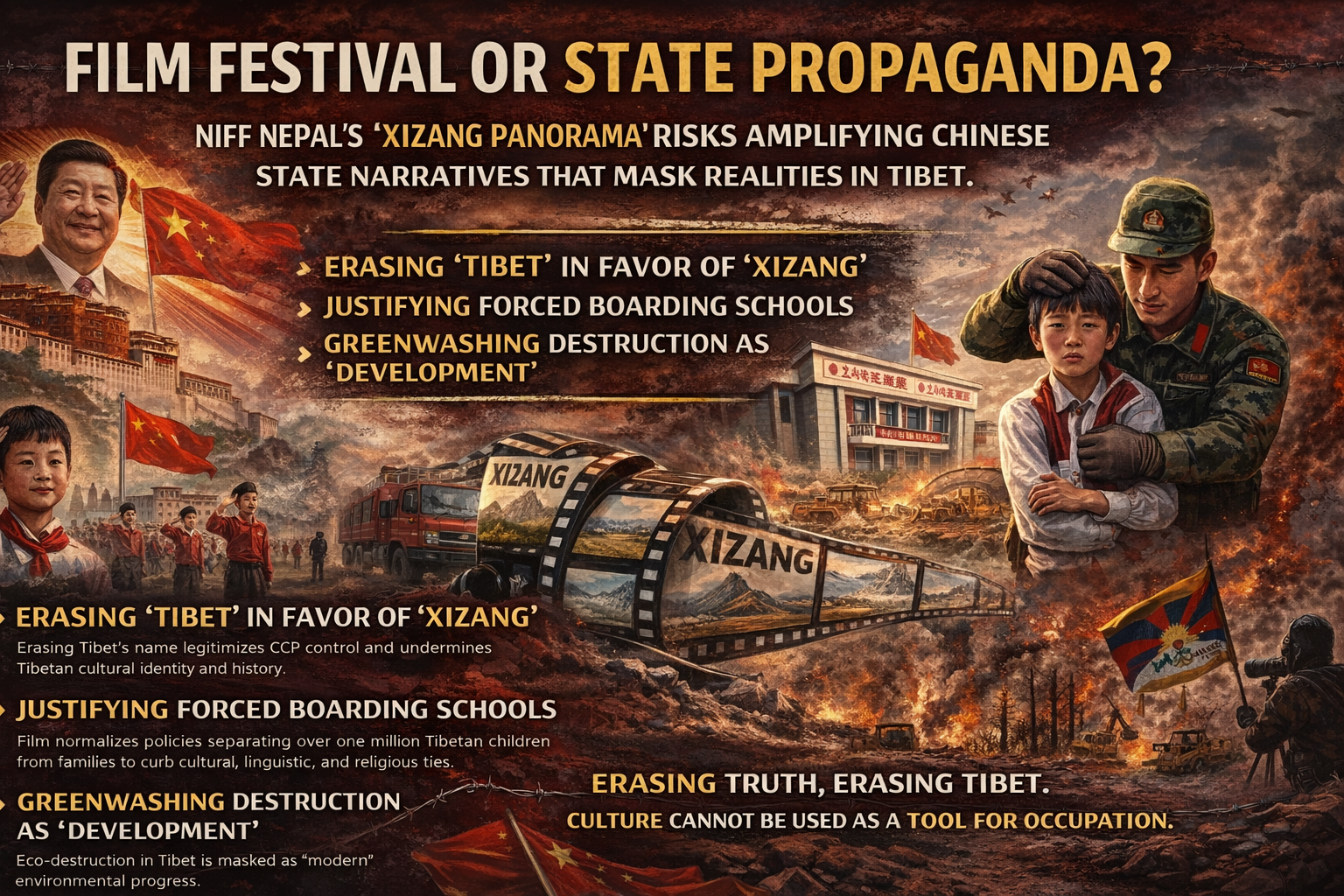
The controversy around NIFF Nepal’s “Xizang Panorama” is not abstract. NIFF’s 2026 schedule and event pages show that the festival ran a dedicated “Xizang Panorama” section in Kathmandu, including films described in language that closely tracks official Chinese state narratives: one synopsis highlighted a “high-tech future” for the Tibetan plateau, another celebrated “dramatic transformation” across Tibetan families, and a third said a French director documented the “positive impact” of a modern Tibetan boarding school. A separate report in The Rising Nepal said the section was specially organized by the associated research centre and featured six films.
Why does that matter? Because film festivals are not just entertainment venues; they are prestige spaces that convert narratives into legitimacy. Research on Chinese film policy shows that the state has long treated cinema as a tool of propaganda and overseas soft power, while maintaining prior approval and censorship over exported films. At the same time, scholarship on authoritarian influence warns that some cross-border cultural activity is not classic “soft power” based on attraction alone, but a more manipulative effort to shape how outside audiences frame issues and language. In that light, a festival section can function as narrative infrastructure, especially when it presents state-friendly frames as neutral culture.
The partner context deepens that concern. The Pan-Himalayan Community Research Center describes itself as a platform for news and information dissemination in the Himalayan region and says it operates with support from the University of Electronic Science and Technology of China. Its own pages show the center was announced at a forum hosted on that university’s campus by a CPC university deputy secretary, and that its work is tied to Belt and Road communication goals, “community of shared future” language, and media collaboration ecosystems reported by Chinese state media. Another center page highlights participation in the 2019 China Xizang Development Forum, jointly sponsored by the Information Office of the State Council of China and the Xizang regional government, with discussion of Party-media communication in Tibetan areas. That does not prove every film in the section is propaganda, but it does show strong proximity to official state narrative networks.
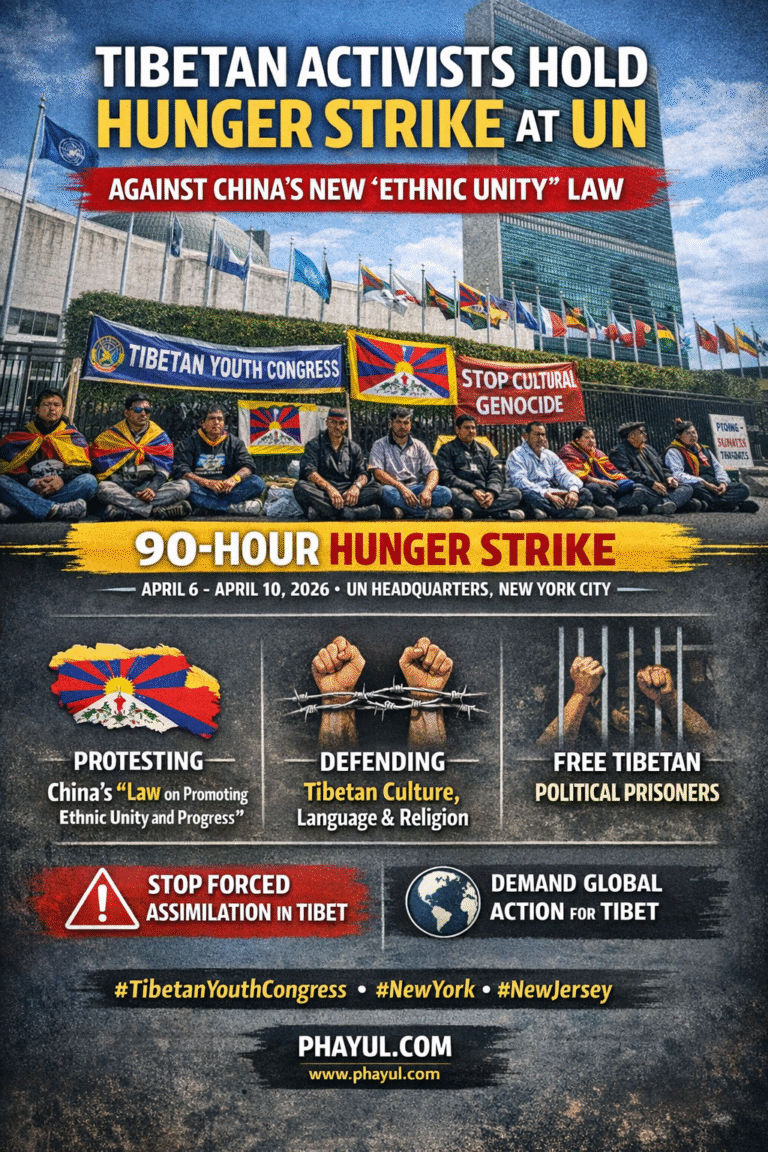
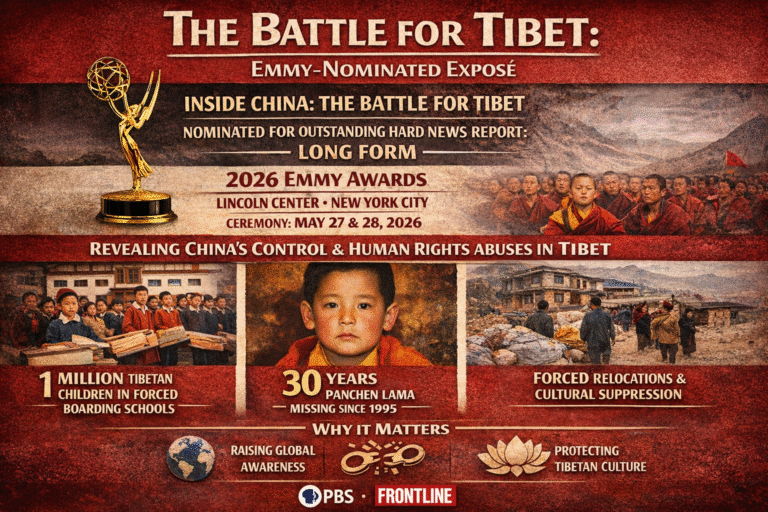
The sharpest point of conflict is the boarding-school issue. UN human-rights experts said in 2023 that around one million Tibetan children were being affected by residential-school policies aimed at cultural, religious, and linguistic assimilation, warning that children were being educated in Mandarin-dominant environments with weak access to Tibetan language, history, and culture. Human Rights Watch had already documented that so-called “bilingual education” in Tibet was reducing Tibetan-medium schooling, and later reported coercive rural relocations that Chinese authorities justified in part through livelihood improvement and ecological protection. When a festival synopsis presents a Tibetan boarding school in purely affirmative terms, it is therefore not being read against an empty background; it is being read against an already documented human-rights dispute.
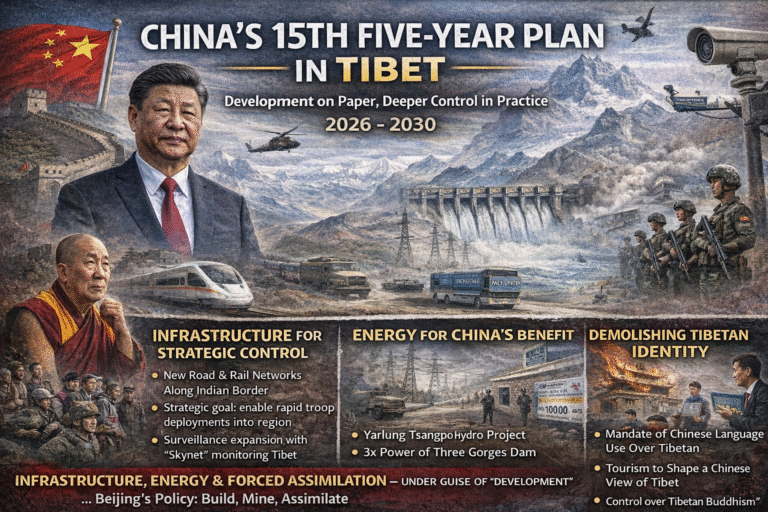
The language issue is equally important. Beijing’s shift from “Tibet” to “Xizang” is not widely treated by scholars as a neutral translation update. Reporting on Chinese diplomatic documents found that official English-language usage had moved toward “Xizang,” while the SOAS China Institute’s Tsering Shakya argues that this renaming drive is part of a broader campaign of political and epistemic control: narrowing Tibet’s meaning, normalizing Chinese sovereign framing, and weakening the sense of Tibet as a historically distinct entity. Even Chinese official white papers on governing “Xizang” openly center lasting stability, national unification, ethnic unity, adaptation of religion to China’s realities, and eco-environmental protection as core governance priorities. So when a festival adopts “Xizang” and programs films around modernization, harmony, ecology, tourism, and schooling, critics see more than wording; they see alignment with a governing lexicon.
That is the deeper analytical point. The concern is not that every film set in Tibet or made in China is automatically illegitimate. The concern is that the curatorial frame, the institutional partner, the program language, and the official policy vocabulary all point in the same direction. A film festival can unintentionally launder state narratives when it presents politically loaded terminology and contested policy themes as ordinary cultural exchange, without transparent disclosure or countervailing voices. In this case, the section’s framing echoed official priorities of stability, modernization, ecological governance, and benevolent development at the exact moment when boarding schools, forced assimilation, and naming politics remain deeply contested.
A responsible festival response would not require banning all Chinese or Tibet-related films. It would require better safeguards: disclosing institutional partnerships and funding links, labeling state-produced or state-aligned programming clearly, adding independent Tibetan filmmakers and scholars to panels, and providing audiences with context on language policy, schooling, relocation, and cultural rights. In other words, the issue is not culture versus politics. The issue is whether culture is being used to hide politics from view.
About the Author

 Jun Hao