
China’s Tibet Mega-Dam: Power, Risk, and Regional Politics on the Brahmaputra
 Jun Hao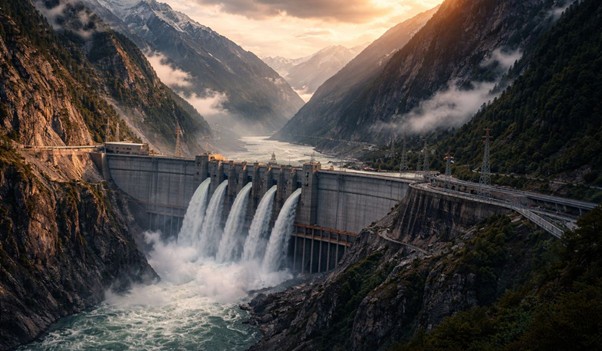
Pic Credit - CPGI
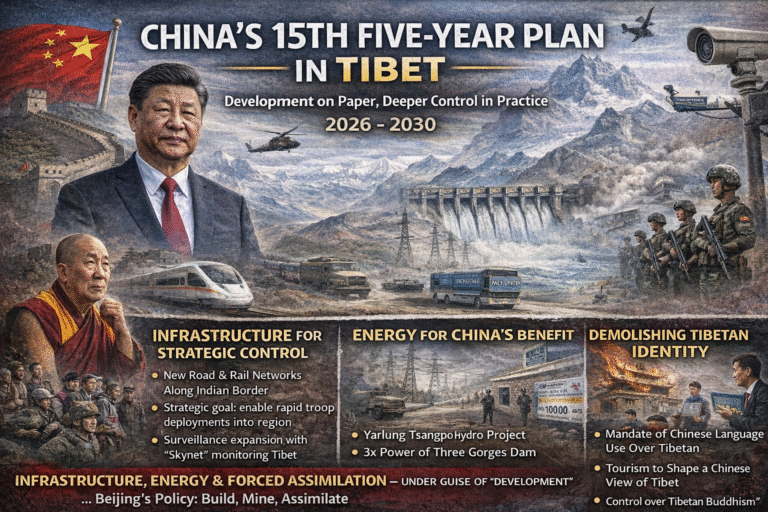
China’s new hydropower project in Tibet is drawing global attention for its huge scale, high cost, and possible impact on Asia’s most important river systems. Planned for the lower Yarlung Tsangpo, near the Great Bend, the dam could become the world’s largest hydropower project. Supporters see it as a major step toward clean energy, energy security, and regional development. But the project also raises serious concerns about environmental damage, earthquake risk, and the effects on India and Bangladesh downstream. It is not just an energy project. It is a project with power, risk, and deep regional meaning.
At first glance, the logic behind the project is simple. China needs more clean electricity, stronger grid security, and new sources of growth in its western regions. Tibet offers exactly the kind of resource Beijing wants: vast untapped hydropower potential, rugged terrain, and powerful rivers that can be turned into a massive low-carbon energy base. But the same features that make the project attractive also make it difficult, controversial, and politically sensitive.
A project of rare scale
The dam is planned for the lower reaches of the Yarlung Tsangpo River, at the Great Bend, where the river drops roughly 2,000 meters over about 50 kilometers. That dramatic descent gives the site extraordinary hydropower potential and explains why engineers have focused on it for years. Reports indicate that the project may involve a cascade system of multiple plants and extensive underground works rather than a single conventional dam wall. What makes the project especially striking is not just size, but cost. Estimates put the investment at about 1.2 trillion yuan, or around US$167 billion to US$170 billion. That places it among the most expensive infrastructure projects ever attempted in China, and it signals that Beijing views the scheme as a national priority rather than a local development project.
For China, the dam fits neatly into a larger strategic vision. It supports the country’s carbon-neutrality target for 2060, reduces reliance on coal, and strengthens the west-to-east transmission strategy that sends power from inland provinces to energy-hungry coastal regions. In other words, this is not only a dam; it is part of China’s broader attempt to build a cleaner and more resilient energy system.
The Great Bend is one of the most difficult places in the world to build major hydropower infrastructure. The canyon is steep, remote, and geologically unstable, with harsh weather and limited access for construction and transport. Large-scale underground tunnelling, slope stabilization, and constant monitoring would likely be essential to make the project work safely. That challenge is not theoretical.
Tibet is seismically active, and a 6.8 magnitude earthquake in January 2025 renewed concern about the vulnerability of major infrastructure in the region. In such a setting, even small design flaws can become serious risks. Dams, tunnels, reservoirs, and diversion channels all have to withstand not only water pressure, but also earthquakes, landslides, and the long-term stresses of a hostile mountain environment. This is why many analysts see the project as an extreme test of Chinese engineering capacity. If it succeeds, it will showcase China’s ability to build at the frontier of hydropower development. If it encounters serious problems, the consequences could be costly in financial, environmental, and diplomatic terms.
Environmental and social concerns
The ecological concerns are substantial. The Yarlung Tsangpo canyon supports fragile mountain ecosystems, unique biodiversity, and sediment flows that help sustain downstream river systems. Large dams can alter water temperature, block fish migration, trap sediment, and change the seasonal rhythm of a river in ways that affect agriculture and natural habitats.
There are also human concerns. The river holds cultural and spiritual significance for Tibetans, and major infrastructure projects in the region often raise questions about local displacement, land use, and the balance between development and environmental protection. China argues that the dam is part of a green transition and that it will not significantly damage the environment or downstream water supply. Critics remain unconvinced, especially given the scale of the intervention and the limited public transparency around technical details.
Why India and Bangladesh care
The strongest international reaction has come from downstream countries, especially India and Bangladesh. The Yarlung Tsangpo becomes the Brahmaputra after entering India, and its flow affects livelihoods, irrigation, flood control, and ecology across a vast region. Any ability to regulate or redirect water in the upper reaches of the basin therefore carries strategic weight.
India has repeatedly expressed concern about the project and has called for transparency on design, safety, and downstream impact. Bangladesh is watching closely as well, because changes in river flow or sediment movement could affect farming, delta management, and flood risk in the final stretch of the river system. The absence of a robust, binding water-sharing framework only adds to the anxiety.
That is why the project is seen by many observers as more than an energy project. It is also a geopolitical instrument, even if Beijing presents it strictly as a domestic development effort. In South Asia, water is not just a resource; it is a source of bargaining power, vulnerability, and mistrust.
China’s Tibet hydropower megaproject combines two of the most powerful forces in modern statecraft: the drive for clean energy and the politics of control over vital natural resources. Its potential benefits are enormous, including low-carbon electricity, regional development, and a stronger national grid. Yet its risks are just as large, ranging from seismic danger and ecological disruption to downstream diplomatic tension. The project will be judged on more than megawatts and money. It will also be measured by whether China can build responsibly in one of the world’s most fragile environments while reassuring neighbours who depend on the same river.
About the Author