China Rejects International Law as 14 Countries and EU Reaffirm Landmark South China Sea Ruling
 Jun Hao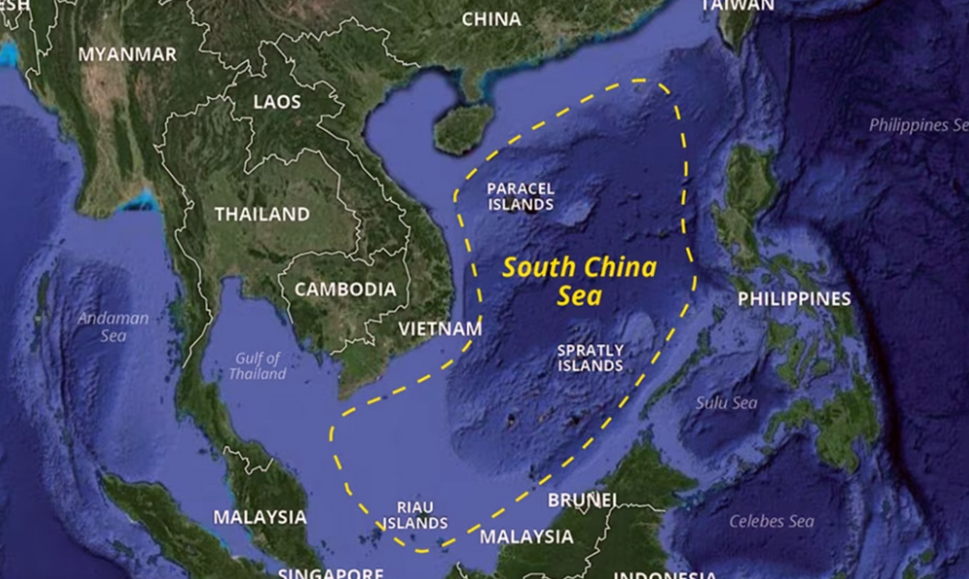
Credit : TibetanReview.net
Based on reporting by TibetanReview.net On 12 July 2026, fourteen countries led by the United States issued a strong joint statement marking the tenth anniversary of a historic arbitration ruling on the South China Sea. They declared that China’s sweeping claims in the region have no legal basis under international law.
The countries the United States, the United Kingdom, Japan, Australia, the Philippines, Canada, Germany, Italy, New Zealand, Estonia, Latvia, Lithuania, Romania and Slovenia described the 12 July 2016 ruling as “final, legally binding and definitive.” The European Union issued a separate statement calling the decision a landmark in the peaceful settlement of maritime disputes.
China, however, rejected the ruling once again. Beijing’s Foreign Ministry said the award was “null and void” and that China “neither accepts nor recognises” it. The ministry claimed the tribunal had violated international arbitration practices and infringed on China’s sovereign rights.
The 2016 Ruling and Its Meaning
The case began in 2013 when the Philippines challenged China’s actions after a tense standoff at Scarborough Shoal. China refused to take part in the proceedings. An arbitral tribunal set up under the United Nations Convention on the Law of the Sea (UNCLOS) still went ahead and delivered its decision on 12 July 2016.
The tribunal ruled overwhelmingly in favour of the Philippines. It found that China’s so-called “nine-dash line” claim to most of the South China Sea had no legal foundation under international law. It also decided that several features claimed by China did not qualify for large maritime zones. The ruling did not decide who owns the islands or reefs, but it clearly defined maritime rights under UNCLOS a treaty that more than 170 countries, including both China and the Philippines, have ratified.
Why the South China Sea Matters
The South China Sea is one of the world’s most important waterways. Roughly one-third of global maritime trade passes through it every year. The area is also believed to hold significant reserves of oil, natural gas and rich fishing grounds. China claims almost the entire sea, overlapping with claims by the Philippines, Vietnam, Malaysia, Brunei and Taiwan. These competing claims have made the region one of Asia’s most dangerous security flashpoints.
In their joint statement, the 14 countries opposed any unilateral actions that undermine regional stability. They specifically criticised the use of coast guard ships, military aircraft and maritime militia to intimidate or block the lawful activities of other nations. Such actions, they said, endanger lives and damage regional security. They called for disputes to be settled peacefully according to international law and reaffirmed the importance of freedom of navigation and overflight.
Ongoing Tensions
The renewed diplomatic support for the 2016 ruling comes at a time of continued confrontations between Chinese and Philippine vessels. In recent years, Chinese coast guard ships have repeatedly been accused of using water cannons, military-grade lasers and dangerous manoeuvres against Philippine resupply missions and fishing boats.
China maintains that it will never accept any claim or action based on the arbitration awards. It rejects third-party dispute settlement and externally imposed solutions for the South China Sea.
A Clear Message
Ten years after the ruling, the message from a broad group of countries is clear: international law still matters. China’s rejection of the tribunal’s decision does not erase its legal force. The joint statement shows that many nations continue to stand by the principle that powerful states cannot simply ignore rules they find inconvenient.
The South China Sea remains a test of whether international law can restrain unilateral claims or whether force and rejection of legal processes will shape the future of this vital region.
About the Author


 Karma Ngawang