
Tibetan Frontier Force or The Vikas Battalion : India’s Secret Guards deployed for Amarnath Yatra security
 Jun Hao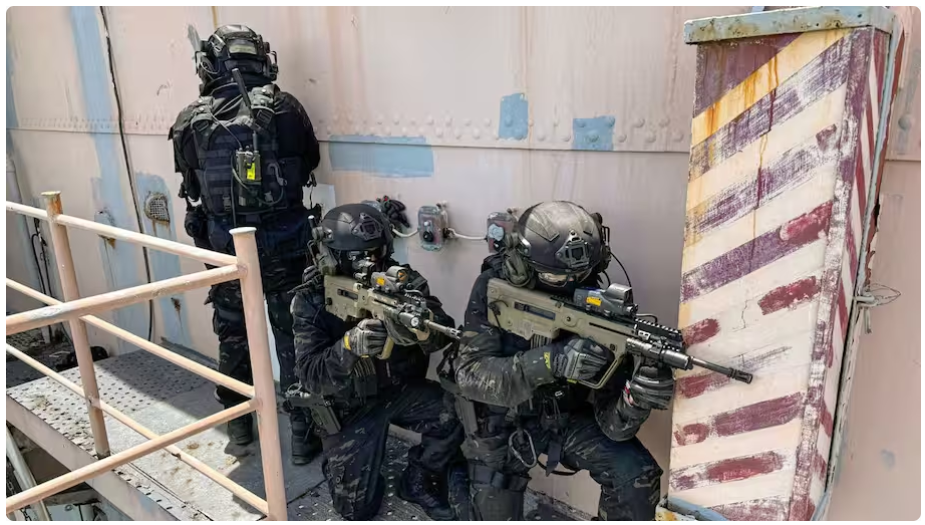
Credit : ANI
For over six decades, they have been India’s most guarded military secret. Operating in the thin, freezing air of the Himalayas, the Special Frontier Force (SFF) has fought in the shadows, executing covert operations that changed the course of wars.
Now, in 2026, a historic shift is taking place. For the first time, this elite, secretive strike force has been visibly deployed to protect a civilian pilgrimage: the Amarnath Yatra. As millions of devotees prepare to journey toward the holy cave, they will be watched over by mountain warriors whose very existence was once officially denied.
This move is not merely a security upgrade. It is a massive strategic statement.
Born in the Shadows, Built for the Snow
The SFF was forged out of sheer necessity. Immediately following the 1962 India-China war, New Delhi realized it required a highly specialized force capable of fighting deep behind Chinese lines in extreme, unforgiving mountain terrain.
Established in November 1962 with initial training support from the CIA and India’s Intelligence Bureau, the SFF was built from a unique and formidable blend of fighters:
- Tibetan refugees, driven by a fierce, deeply personal desire to counter Chinese expansion.
- Khampa resistance fighters, renowned for their ruthless and effective guerrilla warfare tactics.
- Gorkhas, legendary across the globe for their absolute fearlessness in close-quarters combat.
Because these soldiers were born and raised in the Himalayas, they possessed an advantage no conventional Indian military unit had: a natural, biological ability to thrive at extreme altitudes. They did not just survive in the freezing mountains; they owned them.
Why Beijing Fears the ‘Phantoms of the Mountains’
China has always viewed the SFF as a profound strategic threat. The force stands as a constant reminder of India’s offensive capabilities along the contested Line of Actual Control (LAC).
The SFF is uniquely dangerous to China for several reasons:
- Masters of the “Death Zone”: SFF commandos regularly operate above 17,000 feet. At heights where regular soldiers suffer from hypoxia and struggle simply to breathe, the SFF is capable of launching rapid assaults and occupying strategic peaks. This grants India an unmatched asymmetric advantage.
- Experts in Sabotage: They are specifically trained to slip undetected behind enemy lines, disrupt vital supply chains, conduct high-risk reconnaissance, and execute rapid occupation of high-altitude vantage points to paralyze Chinese military plans.
- The 2020 Masterstroke: During the intense border standoff in Ladakh, the SFF executed a daring midnight operation known as Operation Snow Leopard. They outmanoeuvred the People’s Liberation Army (PLA) to capture the critical heights of the Kailash Range. This single, stunning tactical move forced China onto the defensive and fundamentally shifted the balance of power during subsequent negotiations.
Beyond their tactical lethality, the SFF carries immense symbolic weight. The deployment of ethnic Tibetan fighters, aggressively defending Himalayan borders under the Indian flag, sends a political message that strikes directly at Beijing’s insecurities regarding Tibet.
A Legacy of Quiet Victories
The Special Frontier Force does not hold public parades. They do not grant media access. Yet, their combat record makes them one of the most battle-tested and versatile special forces on the planet.
Their legendary, often classified, achievements include:
- The 1971 Bangladesh Liberation War: Known then as the “Phantoms of Chittagong,” they secured the treacherous Chittagong Hill Tracts and destroyed heavily fortified Pakistani positions, operating completely under the radar.
- Operation Meghdoot (1984): They played a critical role in helping India secure the Siachen Glacier—securing the highest and coldest battlefield on Earth before enemy forces could claim it.
- Operation Blue Star (1984): SFF commandos were covertly deployed to handle extreme counter-terror situations inside the Golden Temple complex.
- The Kargil War (1999): They provided crucial high-altitude combat support to the Indian Army, helping to reclaim seemingly impossible peaks from entrenched Pakistani infiltrators.
The 2026 Amarnath Yatra: A Fortress in the Himalayas
This year, the Amarnath Yatra faces unprecedented security challenges. With rising intelligence reports indicating the presence of Pakistani-backed militants eyeing the region, Indian authorities have constructed the largest, most technologically advanced security architecture in the history of the pilgrimage.
Over 100,000 security personnel from the CRPF, BSF, ITBP, and local police have locked down the valleys and highways. This massive ground grid is reinforced by over 400 CCTV and facial recognition cameras, real-time drone surveillance, and 28 elevated watchtowers. Authorities have even implemented the QR-based Pehchan App to verify service providers and mandated RFID cards for all pilgrims, all monitored from three integrated command centres.
But the true game-changer is the unprecedented deployment of the SFF. Positioned heavily on the high ridges overlooking the Pahalgam route, they provide an impenetrable, elite layer of vertical protection.
Their tasks are clear:
- Dominating the mountain peaks and upper forest belts above 12,000 feet.
- Conducting deep search and sanitization operations in rugged terrain where regular forces cannot easily patrol.
- Sealing off high-altitude infiltration routes to neutralize threats before they can even approach the valleys below.
A Message to the World
By placing the SFF on the ridges of Amarnath, New Delhi is broadcasting a multi-layered strategic warning.
To terror groups and infiltrators, the message is unequivocal: the high-altitude mountain passes you once exploited are now actively guarded by the deadliest mountain warfare specialists on earth.
To China, the signal is equally stark: India’s covert mountain strike capability is not restricted solely to the LAC. The SFF is active, operationally ready, and capable of deploying rapidly across the entire Himalayan region.
For decades, the Special Frontier Force existed only in rumours. Today, they stand in the light, blending India’s deep spiritual traditions with its ultimate strategic strength. As pilgrims walk toward the holy cave, they can find profound peace in knowing that their sacred journey is protected by the nation’s most silent, skilled, and fearless defenders.
About the Author


 Tashi Nima


 Lobsang